

Chapter 1
The End in Mind
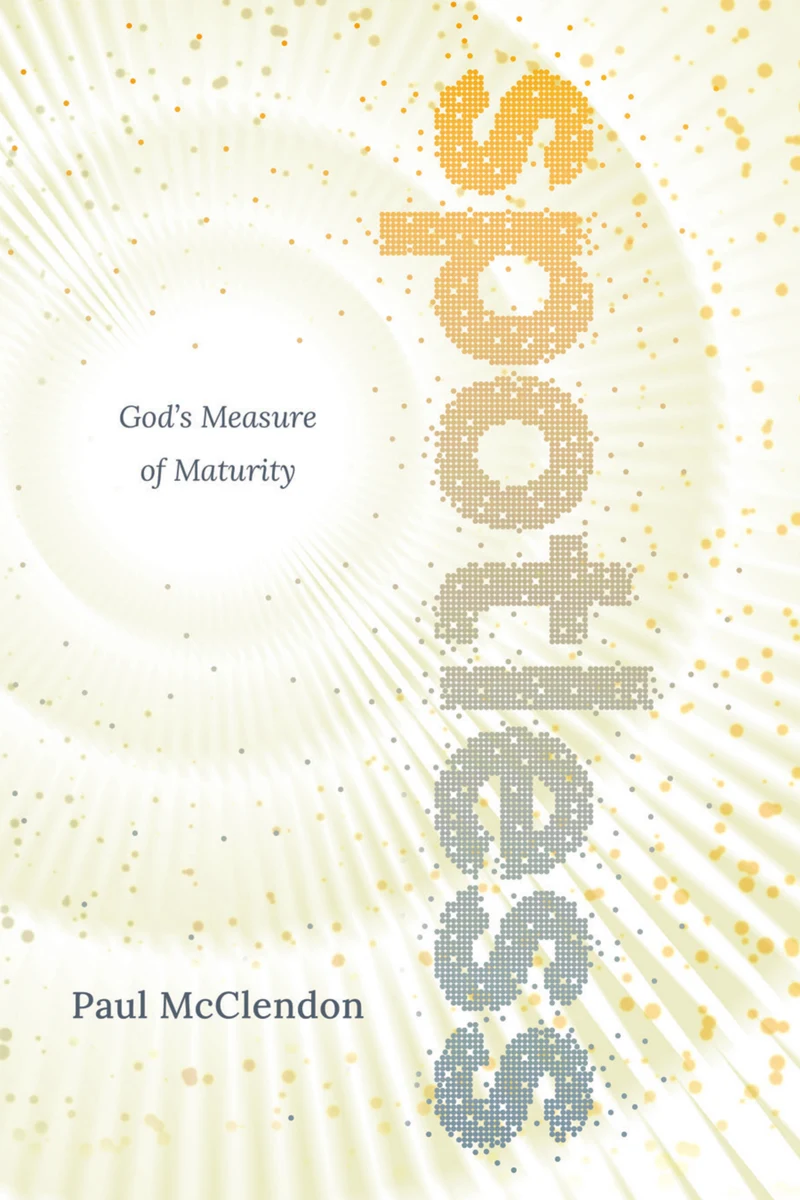
From Spotless: God’s Measure of Maturity by Paul McClendon
“The fields are ripe with harvest;
Fields1
Would you come and serve the Lord?
The leaves are always green;
Would you come and heal these nations?
The fig tree is in bloom;
Would you tell them that I am coming?
The trumpet’s on his lips;
Would you tell them that I love them?
Would you tell them that I love you?
In 2002, the Lord sent me to Abilene, Texas. I had just graduated from college with a double major, where I was a four-year football letterman at Texas Tech. Everyone expected me to follow this great path into business and success, but my heart was set on ministry. My true prayer was, “Lord, send me wherever you want. Send me to the darkest place on earth.” I was ready for the heart of Africa or Central American slums or some house of prayer somewhere in the eastern block. But as with many of my prayers, I didn’t know what I was asking.
Abilene, Texas ... an area in Central West Texas that’s on the edge of cotton farmland, mesquite forests, and hills full of cedars and oaks. Shake it all up, add a bit of cactus, and you got it. Ranchers and farmers ... teachers and preachers. Abilene is arguably the most conservative place in the US. It is literally the buckle of the Bible Belt with three Christian universities (Church of Christ, Baptist, and Methodist) in a city of 100,000+ and a church on every corner. I have a picture taken from the street level that has five steeples in it. Five! This is where you want me, God? This is the “darkest place on earth?” Okay!
I took a job as Worship Pastor / College Minister at a new church plant on the outskirts of the city. And for the first two weeks, the Lord challenged me to eat out by myself all over town. I was stunned at this request. I should be networking with other pastors and getting to know the other staff—something, anything other than eating by myself in a new place.
I was grumpily obeying when I reached the last day of my two weeks. I was sitting in Wendy’s eating a Dave special with mustard and a Dr Pepper, like a true Texan, and I was griping at the Lord. I was frustrated at the fruitlessness of the endeavor and generally sour about the whole mess. It was here that I heard the Lord speak, “Listen and look around you.” I heard the sound of the music from the overhead speakers playing some 80s power ballad that seemed a bit too loud. There was the rustling of wrappers and the sounds of the kitchen. I saw the single mother, the airman in his greens, an old lady, an old man ... every table was in use. But something strange was happening. No one was talking, and the reason was that everyone in that place was sitting alone ... by themselves.
The darkest place in the world is to be alone and unknown in a room full of people, and the spirit of religion in a region can relentlessly breed this type of isolation. My heart broke with the weight of this revelation. I wanted to scream, I wanted to invite people to my table, I wanted something different. This is not how Jesus would do it, and this doesn’t look like heaven, I thought. But I just sat there in my darkness of unbelief and fear, did nothing, and finished my lunch. I had no idea that the darkest place I was being sent to was inside me. I didn’t know what I didn’t know—but as I was about to figure out, I had stumbled upon the right path. Darkness in itself isn’t bad. God does His best work there. Darkness is His creation canvas. Darkness is where you find the best treasure. It’s not the darkness that is the problem, but how we respond to it and what we do with it. Our fear in the darkness isn’t about a place; it’s a reflection of the disease in our soul that can only be snuffed out by a faith that responds, “He is who He says HE IS!” There is a beautiful scripture that describes the journey into darkness that God ushers us into. “The people stood far off, while Moses drew near to the thick darkness where God was.”2
During that season, the Lord took me to a passage in Hosea a lot. It opens:
“Therefore, behold, I will allure her, and bring her into the wilderness …”3
These verses from Hosea 2 became one of the foundational scriptures for the college ministry Tai and I led. Mainly, everyone laughed and identified that Abilene was the wilderness to which they had been sent. “He allures me into the wilderness...” became an inside joke with my people. “How did you get to Abilene?” Queue the outrageous, bizarre story. Everyone related to the question, “Why Abilene?” But it’s the wilderness/darkness where God speaks. And it’s where we learn not only who He is but who we are.
I marvel at the intentionality of the Lord as “He establishes the times and places in which you should live, He did this so that you would seek Him, reach out to Him and find Him, for He is not very far from you!”4 The purpose of God in putting me here to seek, reach, and find Him is no accident. You are where you are on purpose. Never underestimate why you are where! I found great hope in that nugget, and I can absolutely say now that Abilene is the greatest place in the world.
You see, this was the place where the Lord would unlock one of the greatest revelations I have ever experienced—a revelationship hidden within the nine verses of Hosea 2:14-23 that are wonders upon wonders. Five wonders, to be specific. I would say that what is birthed here could be described as the Kingdom of heaven’s “source code”… the strategy of what must happen for the maturity of the Bride Church found in the book of Revelations, the pure and spotless one. Hosea is the only place in scripture where you see the process of a harlot becoming a bride—His Bride. Another way He showed it to me was that these five are the spiritual senses that need to be awakened so that we can exercise them in the Kingdom or simply the way of Jesus from heaven to earth. However you look at it, there are five foundational truths. Truths that when formed and established in the believer as they are in Christ, will change not only your personal life but the whole of creation as well. These truths manifesting in you is what creation groans for.
It took me fifteen years to get them down, or, rather more correctly, I have been soaking in these five truths for that long. They are as follows, not in the level of importance but as they are unveiled in Hosea.
- Encounter
- Identity
- Restoration
- Kingship
- Honor
None of these truths are new to you. Thousands of books have been written on each of them. Read those books. Use every tool you can find. Gather as much understanding as you can about each. These truths, unpacked and in unity, are exactly how Jesus walked on the earth, and I believe how God wants us to walk now.
Before going further, I make this assumption about you, the reader. I write assuming you have a concept of typology in the Old Testament. “The idea of typology has to do with New Testament indications of patterns and people in the Old Testament who were, in a sense, created to serve as pre-figured shapes of what Christ would do. Adam is one clear example of an Old Testament person who is said to be a type of Christ.”5
Another important assumption is how “the Hebrew mind viewed God quite differently from the systematic theological thinking of the West, which defines God and his work with creation in a linear manner. The Western-style treatment of the divine character attempts to explain inconsistencies and harmonize contradictions systematically. The Hebrew mind was filled with wonder at the mystery of God. The vastness of God and His inscrutable [un-investigable] ways left them awestruck. Inconsistencies and contradictions are intimately related to human, finite understanding of the infinite God. He is beyond human comprehension. First-century Jews approached God through an interactive associative mentality. The fact that God is incomprehensible is very much a part of Jewish thought processes. The Western mind, however, explains everything but understands so little of the divine nature. The Hebrew mind, on the other hand, is overpowered by a sense of wonder and amazement. It thrives on the inconsistencies and contradictions of the one awe-inspiring God.”6
“To the Hebrew mind, however, things are not linear, but circular. God’s existence is not a theory to be proven, but a truth to be experienced. The concepts being described in the Bible are not intended to be dissected and examined but taken as a whole and applied to our lives.”7
So, I have given you the secret up front, and while there are mysteries in this age yet to be uncovered, it is not about knowing at this point. It is about doing and living these truths out. Like the Lord said to me once, “If you truly believed the scriptures you have memorized, you would change the world.” Let me show you what the Lord does in response to our obedience to these truths. Look at the last part of Hosea 2.
“In that day I will respond,” declares the Lord —
“I will respond to the skies, and they will respond to the earth; and the earth will respond to the grain, the new wine and the olive oil, and they will respond to Jezreel.
“I will plant her for myself in the land; I will show my love to the one I called ‘Not my loved one.’ I will say to those called ‘Not my people,’ ‘You are my people;’ and they will say, ‘You are my God.’”8
The passage is about Hosea and Gomer, but it is a picture of the relationship between God and the nation of Israel. It is also a type of Christ and His Bride—the Church. Look deeper, and it is also an invitation to explore the relationship between us and God as individuals. It goes beyond salvation. Christ alone made atonement for us, and we only had to receive it. This is more a glimpse at sanctification—maturation. It is God’s Self-disclosure of the fullness of His love, His sacrifice, and His power. Contained in these words is the very strategy of heaven for us to sit with in wonderstanding.
Unpack this with me: as we allow the truth of these particular wonders to saturate our soul, the God of heaven responds to this maturation with a sort of baptism. He responds to the skies. It’s like the falling of the first domino—as if it was already set up beforehand because the sky responds to the earth. Rain! Refreshing rain. Possibly the latter rain. And the earth responds with fruitfulness—grain, new wine, and oil.
It is not a stretch to see the earth as our own souls because Adam was literally created from the dust of the earth, and Jesus identified the soils in the Gospels as preparation of the heart of man.
The grain, new wine, and oil are symbols of abundance, harvest, and provision from heaven. Broken down further, grain is a picture of the bread of God, the sustaining Word of God, born in Bethlehem, “the bread basket,” Jesus. The new wine is often a picture of the intoxicating Spirit of God, fulfilling, wild, and unpredictable. The oil is a symbol of anointing and the power of authority of the Father. The Word, the Spirit, and the power of God are available to you in full.
As the skies respond to the earth, the earth responds to the grain, new wine, and oil, which are the fruit of the process—and this fruit answers Jezreel, or “God sows.”
Hosea says that God will sow her (Gomer, Israel, the Church, you and me) in the land. Then something peculiar happens. God calls those who aren’t His “ people.” Doesn’t that sound a bit like the salvation of a lost people? It’s the strategy of heaven.
Let me say it another way. God takes those who have set their hearts on looking like Christ on the earth, and then He pours out His rain (His Spirit) on the earth, which provides all the things that are needed to accomplish the task He has set beforehand for us. God plants us in a specific land at a specific time, so all those who aren’t His become His—the harvest!
This is a story of a people with harlot thoughts being transformed completely by the good news of heaven to be the very vessels through which the harvest comes. That is truly beautiful, definitely a wonder, and just like my God!
Here’s the secret. We, the Bride of Christ, are the planting of the Lord, and His strategy includes us being planted in a specific land at a specific time to yield a harvest of souls, even nations. There is no greater gift for us than to partner to this end. It looks a lot like laying one’s life down for a friend.
It is why we are where we are.
I will keep this end at the forefront of my mind, for it is Christ in us, Christ with us, that is the hope of glory—the very dream of God. I pray we expand our capacity to be conduits of such audacity.
Notes
- 1Fields. ©2012 Paul McClendon. All Rights Reserved. ↩
- 2Exodus 20:21, ESV. ↩
- 3Hosea 2:14, ESV. ↩
- 4Acts 17:26b-27, author paraphrased (from the 1984 NIV). ↩
- 5What is Typology? How Can We Use it Responsibly in Bible Study? Ask Ligonier with By Sinclair Ferguson © 2024 Ligonier.org. All Rights Reserved. Retrieved from ligonier.org. on May 24, 2024. ↩
- 6Paul the Jewish Theologian: A Pharisee Among Christians, Jews, and Gentiles by Brad Young, Ph.D. Baker Academic © 1995-2012. All Rights Reserved. Pg. 25. ↩
- 7Ibid. ↩
- 8Hosea 2:21-23, NIV. ↩
The journey continues November 13
Spotless: God’s Measure of Maturity releases November 13, 2026 in print and ebook. Twenty-four more chapters through Encounter, Identity, Restoration, Kingship, and Honor.