

For book clubs and small groups
Spotless Discussion Guide
Six sessions and 100 questions for Spotless: God’s Measure of Maturity by Paul McClendon.
Welcome
A guide for wrestling, not settling
“I pray this book has been a revelation for you—even more, an invitation into revelationship for you. It was for me. I wrote it hoping you would wrestle with new questions—that is wonderstanding, after all.”
Paul McClendon, Chapter 25
Spotless is built on five truths that were found unveiled in nine verses of Hosea 2:14–23, “the only place in scripture where you see the process of a harlot becoming a bride—His Bride.” The book walks through them in order: Encounter, Identity, Restoration, Kingship, and Honor. This guide follows the same path.
The questions here are written to start a wrestle, not settle one. Many deliberately press on tensions the book raises and leaves open: capacity and comfort, waiting and moving, healing and health, kingship and honor. You will not get through every question, and you are not meant to.
What’s inside
- Six sessions, one for each part of the book plus the Epilogue
- All 100 discussion questions, organized by chapter
- An opening question, Scripture to read together, a weekly practice, and a prayer prompt for every session
- A twelve-week pace for groups who want to go slower
- A short glossary of the words Paul coined
A typical gathering (75–90 minutes)
- 10 min
- Welcome and the opening question
- 10 min
- Read the Scripture together
- 45–60 min
- Discuss four to six questions
- 5 min
- Choose this week’s practice
- 5 min
- Close in prayer
For leaders
Leading the wrestle
Let silence work
Hard questions take a moment. Count to ten before rephrasing or answering your own question.
Follow the energy
If one question opens something real, stay there. A single honest conversation beats six quick answers.
Ask, then ask again
“What makes you say that?” and “Where do you see that in your own life?” move a group from opinions to testimony.
Honor differences
Chapter 25 offers a hopeful, “victorious” view of the end times, and Paul says plainly, “I am not trying to create a doctrine.” Make room for members who see it differently.
Handle tender topics with care
Chapters 11–13 touch on fear, deep-rooted sin, and deliverance. Keep sharing voluntary, and know where to point someone who needs pastoral care or counseling.
Share the practice
Start each gathering after the first by asking how the week’s practice went. That is often where the best stories come from.
Need more time? Twelve-week pace
For groups that want more time with each chapter. Use the questions for the chapters you read that week.
- Week 1Introduction, Chapters 1–2
- Week 2Chapters 3–5
- Week 3Chapters 6–7
- Week 4Chapters 8–9
- Week 5Chapters 10–12
- Week 6Chapters 13–14
- Week 7Chapters 15–17
- Week 8Chapters 18–19
- Week 9Chapters 20–22
- Week 10Chapters 23–24
- Week 11Chapter 25
- Week 12Epilogue and looking back
Words to know
Paul’s vocabulary
Paul coins a few words along the way. Here they are in his own language.
- Wonderstanding
- An extraordinary, ardent search of great questions which ultimately apprehends things new, unusual, and incredible to grasp. It is a willingness to wrestle with truth and become lost in the marvel of that which was hidden.
- Revelationship
- God’s steadfast, unrelenting unveiling of Himself through the conduit of nature and truth to make me aware of my place in His righteousness. Our ability to access deeper and deeper levels of intimacy with Him through the invitation to sit with Him in wonder as each layer of His disclosure reveals more of His character, both great and terrible.
- Capacity
- Our ability to hold the outpouring of abundance God brings… “I need you to get a bigger cup!”
- The soul cycle
- Redemption, satisfaction, restoration, awakening, and revival. “An eternal helix of awareness that is evidence of our maturity.”
- Spotless
- “Spotless means we are standing inside of our perfection in Christ. Spotless means to own our maturity, capacity, and responsibility on this earth.”
- Skilled and ready
- “After writing this book, I think the best definition I could give for being mature is one who is skilled and ready.”
“The expectation of Heaven is that I am evergreen!”
Session One
Introduction & Encounter
Experiencing God and learning to recognize His presence and voice.
Read before you gather: Introduction and Chapters 1–5
The big idea
Before anything changes, we have to meet Him. The overflowing cup is not the goal; a bigger cup is. Every encounter with God carries words to be spoken, fruit to be shared, and a yes to be given.
Read together
- John 21:15–17Jesus asks Peter, “Do you love Me?”
- Hosea 2:14–15“I will allure her … and give her vineyards”
Open (10 minutes)
Share a moment when time seemed to stand still for you. Where were you, and what made it unforgettable?
Discuss (45–60 minutes)
Choose four to six questions. Leave room for silence. The goal is to wrestle, not to finish.
Introduction: The Four Scenes
- 1
In the first scene, the cup is overflowing, and God still says, “Get a bigger cup.” What might it mean that a life overflowing with blessing can still be a life that is too small?
- 2
“It will grow to the size of its tank.” What tank are you living in right now, and who or what built it?
- 3
The child with broken growth plates looks old but cannot reach full stature. Where might you be aging in your faith without maturing in it?
- 4
Jesus asks Peter for agape, and Peter can only offer phileo. Have you treated the gap between what God asks and what you can give as a failure, or as an invitation to expand your capacity?
Chapter 1: The End in Mind
- 5
Paul prayed to be sent to “the darkest place on earth” and was sent to a city with five steeples in one photograph. What does his story suggest about where darkness actually lives?
- 6
In a crowded Wendy’s, no one was talking because everyone was sitting alone. Where in your daily life are people “together alone,” or have you stopped noticing it?
- 7
“You are where you are on purpose. Never underestimate why you are where.” What would change if you believed this about your current address, job, or season?
Chapter 2: The Audacity of Heaven
- 8
The book imagines the enemy’s outrage: “What has man done that he should deserve to rule anything?” Do you secretly agree with that question?
- 9
“Let there be light” and “Let them have dominion” share the same creative structure. If you believe the first word worked, why is it harder to believe the second one did?
- 10
God could have finished “this whole mess” long ago, but He chose to use us because it is a love story. What does it say about God that He prefers partnership to efficiency?
- 11
In Hosea 2, Gomer’s exposure is shocking, yet the story turns toward a God who allures her back. Which is harder for you to receive: God’s justice or His pursuit?
Chapter 3: Seeing the Heavenly Beautiful!
- 12
Some well-meaning Christians would call Paul’s hunger for the supernatural “so heavenly-minded that he’s no earthly good.” Where have you held back your wonder so you’d look practical or safe? What might you be missing?
- 13
“Once tasted, heaven is never forgotten.” Name a moment when time stood still for you. What was God saying in it that you have not yet put into words?
Chapter 4: The Fruit of Encounter
- 14
As a boy returning from camp, Paul gave his home church judgment instead of testimony. When have you resented others for not seeing what was only given to you so you could speak it?
- 15
“Every encounter you have with God carries the words needed to express it.” Which of your encounters still has words buried inside it?
- 16
The book says we don’t just get grapes from encounter; we get “the whole vineyard.” Why do we so often settle for the morsel when we have been given the structure that keeps producing?
- 17
An apostle is “one sent forth with orders.” If your encounters with God came with orders, what have yours been, and have you carried them out?
Chapter 5: Saying Yes!
- 18
Tai Ann’s yes on Dominic’s Hill set aside some of her own dreams for a season. How do you hold the truth that a holy yes can still cost real things?
- 19
When Aladdin asks, “Do you trust me?” on the tower, Jasmine answers “timidly, almost with a question in her voice,” but keeps her hand in his. Later, on the balcony, she answers confidently. Which “yes” are you giving God right now: the trembling one or the confident one?
- 20
Paul calls his wife’s yes “the greatest earthly possession I own.” Have you considered that your yes to God might be something He treasures that much?
- 21
The chapter closes by saying that without encounter and your yes, you cannot mature. What yes are you postponing right now, and what is it costing your growth?
Pulling the part together
- 22
Across these five chapters, encounter keeps producing three things: words, fruit, and a yes. Which of the three is most missing from your walk with God right now, and why?
“WE GET THE WHOLE FREAKING VINEYARD!”
Try this week
Do what Paul did in Abilene: eat one meal alone this week somewhere public. Put your phone away, then “listen and look around you.” Write down what you notice and what you sense God saying.
Close in prayer
Ask God for a bigger cup, and for the words that came with your last encounter with Him.
Session Two
Identity
Discovering who we are in Christ and learning to live from that identity.
Read before you gather: Chapters 6–9
The big idea
“Who am I?” is really “Why am I?” God renames those He encounters, calls His people a Bride, and gives us His own name, I AM. True vision is seen through the lens of that identity.
Read together
- Genesis 28:10–17Jacob at Bethel: “God is in this place”
- Exodus 3:1–14The burning bush and the name I AM
Open (10 minutes)
What did you want to be when you grew up? What does that dream say about who you really are?
Discuss (45–60 minutes)
Choose four to six questions. Leave room for silence. The goal is to wrestle, not to finish.
Chapter 6: The Rock
- 23
“Who God is to me matters to Him. Who I say He is matters to Him.” Why would the “God of All” care what you call Him?
- 24
Abram, Jacob, Simon, and Saul all received new names after an encounter. If God renamed you today, what “old name” would He be retiring?
- 25
The book says identity is less “Who am I?” and more “Why am I?” How does your answer to the second question shape your answer to the first?
Chapter 7: … and the Hard Place!
- 26
In a holy encounter, Paul saw himself as a bride, and Jesus asked, “Could you love Me like this?” Paul says he felt “protected and chosen… cherished.” What would it take for you to receive God’s love as His Bride, without needing to be the strong one?
- 27
“Without struggling through it, much like a child with a broken growth plate, it will be hard to reach full stature.” Is there a mystery in your faith you have refused to wrestle with because it is uncomfortable?
- 28
Palo Duro Canyon is a “thin place” you don’t see until you are descending into it. What are your “certain places,” and when did you last go back to one?
- 29
Paul writes, “How we treat and recognize our women is how we treat and recognize the Bride of Christ.” Think about the women in your home, church, and workplace. Where are they honored, overlooked, or held back? What might that say about how you see Christ’s Bride?
Chapter 8: God’s Last Name
- 30
If “I AM” is God’s last name, then “I am such an idiot” takes His name in vain. What “I am” statement do you say about yourself most often, and would you let someone say it about God?
- 31
Every language has a word for “I am,” so we speak God’s name in every introduction. How would you introduce yourself if each sentence had to be true of the One whose name you carry?
- 32
Moses asked “Who am I?” and God answered with who He is. Why do you think God answered the question of identity with His own name instead of a description of Moses?
- 33
The section closes: “It is time to know who you are as you know whose you are.” Which do you know better right now, who you are or whose you are?
Chapter 9: Vision to Destiny
- 34
A room full of adults gave a standing ovation to a “popstar chocolate maker.” What might that ovation reveal about the desires we’ve buried under adulthood?
- 35
Paul says living from mission left him “broken, bound, and bored,” so God benched him. Could a calling you love be keeping you from the One who called you?
- 36
“It was more important for me to know why He gave me a call than to actually do it.” Do you know the why behind your calling, or only the what?
Pulling the part together
- 37
The Identity section moves from the Rock to the Hard Place to the Name, and then to vision. Which of these is your foundation, which is your wrestle, and which are you still learning to see?
“It is time to know who you are as you know whose you are.”
Try this week
For three days, write down every “I am …” statement you say or think about yourself. Cross out any that would take God’s name in vain, and write a true statement beside each one.
Close in prayer
Thank God for the name He has put on you. Ask Him what old name He wants to retire.
Session Three
Restoration
Receiving freedom from brokenness, false beliefs, shame, and spiritual bondage.
Read before you gather: Chapters 10–14
The big idea
God’s will is good, pleasing, and perfect, and it is not entirely safe. Restoration goes after the roots beneath our recurring sins: the fears on our lips, the cords that bind, and the chaos that has no right to our peace.
Read together
- Romans 12:1–2Test and approve His good, pleasing, and perfect will
- Psalm 23“He restores my soul”
Open (10 minutes)
Describe something you have restored, repaired, or rebuilt with your own hands. How did it feel when it was finished?
Discuss (45–60 minutes)
Choose four to six questions. Leave room for silence. The goal is to wrestle, not to finish.
Chapter 10: The Roots of Restoration
- 38
Seven hours of laying pavers ended in a “sweet sense of accomplishment.” Why do you think God built the joy of restoring things into us?
- 39
Romans 12:2 suggests we “test and approve” God’s will. How do you react to the idea that God invites your approval?
- 40
The book describes God’s will as a waterfall: beautiful, powerful, “not entirely safe,” and it smooths us like a stone for a giant’s forehead. What is God tumbling off of you right now?
Chapter 11: Your Lips Are Moving
- 41
The grandiose sins we confess at campfires are “fruit,” but the vine is a subtler lie. What sin keeps coming back in your life, and what root might be feeding it?
- 42
Paul promised never again to make a decision from fear. Think of your last major decision. Honestly, was fear casting a vote?
- 43
“What we fear most, we worship most,” and “the gods we honor the most rest on our lips.” Listen to your own speech this week. Which god does it honor?
- 44
The book pictures the soul as a courtroom where flesh and spirit meet and we weigh decisions. Who has been sitting on the bench in your courtroom lately?
Chapter 12: He Restores My Soul
- 45
“It’s going to get bad … really bad … and then it’s gonna get really, really, really good.” Have you ever received a word you would rather not have heard? How did you hold it while it was coming true?
- 46
At twenty-nine, Paul was “sure of the decision, but unsure of my identity.” Can you make the right choice and still lose your sense of self for a season?
- 47
For a season, Paul stopped reading new passages and asked God what He wanted to show him in the verses he already knew. What familiar verse might God want to make new for you?
- 48
Restoration started with something as practical as changing his clothes. What outward change might match an inward restoration God is doing in you?
Chapter 13: Toward Deliverance
- 49
“A Christian can have whatever they want.” Does that line from Jack Taylor comfort you, unsettle you, or both? Why?
- 50
The book defines deliverance as “getting rid of the stuff that’s in the way of your destiny.” Using that definition, what would you need to be delivered from?
- 51
In Paul’s dream, the same demon stood 40 feet tall, then his own size, then the size of a mouse. “The demon was the same demon and he never changed size—it was me who changed. My capacity grew!” What battle in your life might shrink if your capacity grew?
- 52
Fallen family legacies such as lack, performance, and injustice are named as strongholds. Which family patterns have you inherited without ever choosing them?
Chapter 14: Boundaries
- 53
A fly on Paul’s nose became a moment about removing distractions from your destiny. What small, persistent annoyance in your life might be more than it seems?
- 54
“Let your ‘yes’ be ‘yes’ and your ‘no’ be ‘no.’” Where do your unclear yeses and noes invite chaos into your peace?
- 55
“Peace means to destroy the authority attached to chaos.” How does that change your picture of peace as merely quiet or calm?
Pulling the part together
- 56
Restoration in this section runs from roots to lips to soul to deliverance to boundaries. Where in that sequence are you right now, and what step have you been tempted to skip?
“In the kingdom, striving is illegal.”
Try this week
Keep a simple fear audit. List the decisions you make this week, large or small, and mark any where fear cast a vote. Bring one to the group next time.
Close in prayer
Invite God to pull up one root, not just one piece of fruit. Pray for peace that has authority over chaos.
Session Four
Kingship
Growing into the wisdom, authority, responsibility, and dominion God intends for His people.
Read before you gather: Chapters 15–19
The big idea
It begins with a wedding vow: the bride price is paid in full. We are saved not only from something but to a King and a kingdom, with righteous abundance, healthy structures, and authority administered the way Jesus did it.
Read together
- Hosea 2:19–20“I will betroth you to Me forever”
- Isaiah 9:7“Of the increase of His government and of peace there will be no end”
Open (10 minutes)
Which gospel did you first hear: what you are saved from, or what you are saved to? How has that shaped you?
Discuss (45–60 minutes)
Choose four to six questions. Leave room for silence. The goal is to wrestle, not to finish.
Chapter 15: The Best Wedding Gift Ever
- 57
The chapter opens with a man running headlong to see the Banner of the Lamb. When was the last time you ran toward God with that kind of reckless abandon?
- 58
Betrothal means “to pay the price and gain the right of possession.” How does it feel to be described as possessed by God? Does the word attract or resist you?
- 59
The Holy Spirit is described as the token of engagement, “forever” starting today. What would it look like to live engaged, not merely saved?
- 60
The book says God’s dwelling looks “less like a church building and more like a city.” How would your faith change if the goal were a city instead of a service?
Chapter 16: Becoming Kings!
- 61
The “Gospel of What I’m Saved From” can make God look like “an angry old man telling us to get off his lawn.” Which gospel did you first hear, and how has it shaped your picture of God?
- 62
The book warns that “What am I saved to?” can become a trap of “unwitting narcissism,” an endless cycle of self-healing tools. Have you ever been waiting to be “whole enough” before you move in obedience?
- 63
“Are you ever really healed or whole enough to ___?” What word goes in your blank?
- 64
If the vows of Christ call His bride to become kings, why do you think so many believers are more comfortable calling themselves servants than heirs?
Chapter 17: Of the Increase … There Is No End!
- 65
Isaiah says two things never stop increasing: His government and peace. Why do you think the book says to attach yourself to what cannot help but grow?
- 66
“When we hear abundance, we think of rappers, billionaires, and politicians.” What would righteous, kingly abundance look like in your family, business, or church?
- 67
Joseph rose from prison to palace because he had “stewarded dreams and mysteries his whole life.” What mystery are you stewarding right now that may matter in a future crisis?
Chapter 18: The Wealth of the Kingdom
- 68
“You made that play with your heart, but your feet were terrible.” Where are you depending on heart and talent when God is asking for structure?
- 69
“If healing is my ability to encounter God in the moment, then health is my ability to encounter God within the structure.” Which do you pursue more, the healing moment or the health pattern?
- 70
The Lord asked Paul what he would do with $50 million, then said, “If you wouldn’t change a thing, why would I give you $50 million?” What would you do with it, and what small “trickle” could you start this week?
Chapter 19: The King’s Domain
- 71
“Gecko, come alive!” Your reaction to that story says something. Did you smile, doubt, or both? What does your reaction reveal about your expectations of God?
- 72
Tai Ann has prayed over many lifeless babies who did not live, and she keeps praying. How do you keep praying for miracles after the ones that didn’t come?
- 73
“When you see brokenness, restore. Where there is sickness, heal. Where there is bondage, cast out.” Which of these feels the most wild to you, and which feels least?
- 74
“What if circumstances no longer happen to you, but you, backed by all of heaven, happen to the circumstances?” Where are you living as a victim of a situation instead of an invasion into it?
Pulling the part together
- 75
Kingship in this book begins with a wedding vow and grows into increase, wealth, health, and authority, and it is “not just designed for you.” Which of these do you struggle to believe God wants for you, and which do you struggle to give away?
“It’s in the vows—He is calling you to become kings.”
Try this week
Healing is encountering God in the moment; health is encountering Him in a structure. Choose one structure to steward this week: a habit, a budget, a schedule, or a rhythm of prayer.
Close in prayer
Pray for courage to believe God wants abundance for you, and generosity to let it flow from you to the world.
Session Five
Honor
Responding to God’s goodness through worship, testimony, faithful living, and the way we treat others.
Read before you gather: Chapters 20–25
The big idea
In serving and submission, kingship becomes honor. Two houses, an active kind of waiting, love letters to the churches, the scent of evergreen, and finally the Spotless Bride: mature, skilled and ready, waiting and hastening.
Read together
- Psalm 96“Worship the Lord in the splendor of holiness”
- Ephesians 5:25–27“Without spot or wrinkle”
- Revelation 22:17“The Spirit and the Bride say, ‘Come’”
Open (10 minutes)
Think of someone who honored you well. What did they do, and what did it awaken in you?
Discuss (45–60 minutes)
Choose four to six questions. Leave room for silence. The goal is to wrestle, not to finish.
Chapter 20: The Way of Honor
- 76
“In serving and submission, kingship becomes honor.” Can a person truly reign without first learning to honor?
- 77
Paul wore “over the top” shoes that said “Legend” until they wore out, humbly, so he could tell the story. Is there a blessing you are hiding out of false humility that God gave you for testimony?
- 78
The Sagrada Família took 144 years, and every detail, “down to the width of the mortar,” was designed to honor God. What would it look like to honor God down to the mortar of your work?
Chapter 21: A Tale of Two Houses: The Strong Man’s House
- 79
David took men who were “distressed, in debt, and discontented” out of the cave and into the forest of “Praise,” where they became mighty men. Which of those three words describes you, and what cave have you been hiding in?
- 80
“David changed their minds.” Could your next victory be less about a new strategy and more about a changed mind?
- 81
Logikos latreia suggests worship that is reasonable, spoken, and part of everyday work. How would your Monday look different if your livelihood were your worship?
Chapter 22: A Tale of Two Houses: Wisdom’s House
- 82
“I’m not going to move until I hear God tell me,” and then nothing happens for years. Have you ever used waiting as a holy-sounding excuse to stay stuck?
- 83
The Hebrew word qava, “wait,” means to bind, twist, and collect, like cords gaining strength. What would it mean to wait actively, binding yourself to the mind of God, instead of passively?
- 84
The measure is “the stature of the fullness of Christ,” not perfection. How is striving toward an “ideal me” on a mountaintop different from growing into His stature?
Chapter 23: To His Hidden Love Letter
- 85
The book suggests Jesus saw His bride in her glorified state before creation, and “had to have her.” What happens in you when you consider being wanted that much?
- 86
Every great love story, even the tragic ones, “reveals and proves that there is a source.” Which love story has shaped your idea of love most, and how does it compare to the original?
- 87
Each church in Revelation has a mindset it must overcome. Which church’s struggle feels most like yours, personally and in your community?
- 88
The chapter invites you to “sit in the revelationship” and “invite the wonderstanding.” What is the difference between understanding something and “wonderstanding” it?
Chapter 24: Evergreen
- 89
The scent of cold evergreen brings “a homesickness for a place … not a ‘where’ but a ‘when’ and a ‘with.’” What are you homesick for that you have never actually had?
- 90
God asked Paul, “Do you remember being evergreen?” Paul laughed: “How can I remember that?” With a knowing smile, God said, “Remember, Paul,” and breathed on him. Is there something about who you were made to be that you’ve forgotten? What might God be asking you to remember?
- 91
We are perhaps 62 to 145 generations from Adam, so nowhere near the thousandth generation of God’s steadfast love. If His love is still running toward its fullness, what does that mean for your family line?
Chapter 25: The Spotless Bride
- 92
“In the end, it’s all about a girl. A girl named Bride.” What changes in your faith if the whole story is a romance before it is a rescue?
- 93
The chapter asks, “Why would we be looking for a Savior again? Was His sacrifice not enough?” How has your view of the end times shaped the way you live right now?
- 94
“It’s easy to take dominion from someone who expects it to be taken.” What does your theology of the end expect, and what fruit has that expectation produced in you?
- 95
The book defines spotless as “standing inside of our perfection in Christ” and owning “our maturity, capacity, and responsibility on this earth.” Which of those three words is God asking you to own next?
- 96
Paul’s best definition of mature is “one who is skilled and ready,” waiting and hastening at the same time. If Jesus came today, would He find you sitting on your hands or skilled and ready?
Pulling the part together
- 97
“We can be spotless! We can stand in our authority.” Looking back over kingship, honor, and a Bride who is skilled and ready, which requires more courage from you right now: reigning or honoring?
“This is why we are spotless—because He is!”
Try this week
Do one ordinary task this week “down to the width of the mortar,” as worship. Then write God a short love letter in response to His, the way the book does.
Close in prayer
Pray Revelation 22:17 together: “Come.” Ask God to make you skilled and ready.
Session Six
Epilogue & Looking Back
Read before you gather: Epilogue: One Last Love Letter
The big idea
The book ends where it began, in Hosea 2: a God who allures, restores, betroths, and calls His Bride by a new name. This last gathering is for listening to the love letter and naming what has changed.
Read together
- Hosea 2:14–23The love letter beneath the whole book
Open (10 minutes)
Read the Epilogue’s love letter aloud, one person per paragraph. Which line landed on you?
Discuss (45–60 minutes)
Choose four to six questions. Leave room for silence. The goal is to wrestle, not to finish.
Epilogue: One Last Love Letter
- 98
“Come sit in my wildness, my darkness, my quietness… you with me is enough.” Which of those three places is hardest for you to sit with God in, and why?
- 99
“Your fears are now doors of Hope forever leading into wonder.” Name one fear. What door might it become?
- 100
“You are not a slave to my love. You choose me as I choose you.” How does it change your faith to be loved as a chosen partner rather than as a servant?
Looking back on the whole book
Which of the five truths, Encounter, Identity, Restoration, Kingship, or Honor, has God been most active in for you during this study?
Paul says that understanding leads to answers and wonderstanding leads to good questions. What question are you leaving with?
If you could tell yourself one thing from this book on the day you started reading it, what would it be?
“Your faults are forgotten, your failings are forfeit, your fears are now doors of Hope forever leading into wonder.”
Try this week
Choose one of the five truths (Encounter, Identity, Restoration, Kingship, or Honor) to keep practicing for the next month. Tell one person in the group which one, and ask them to check in.
Close in prayer
Bless one another by name. Speak one sentence over each person about who you have watched them become.
“Live legendary, my friends—skilled and ready, waiting and hastening. Become Spotless. He is coming soon!”
Scripture references follow the passages cited in the book.
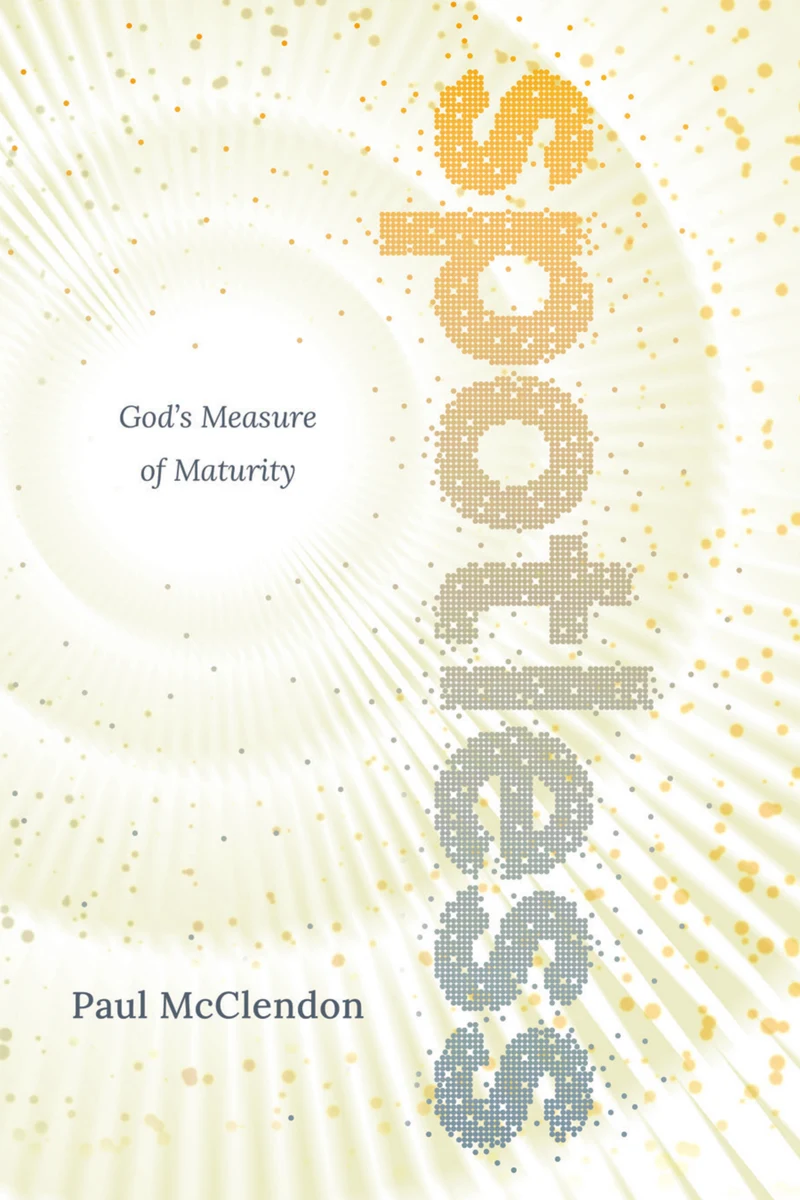
Read it together
Spotless: God’s Measure of Maturity releases November 13, 2026 in print and ebook.